


Medial vs. Lateral Patellar Luxation - What Is the Difference?
Medial vs. Lateral Patellar Luxation - What Is the Difference?
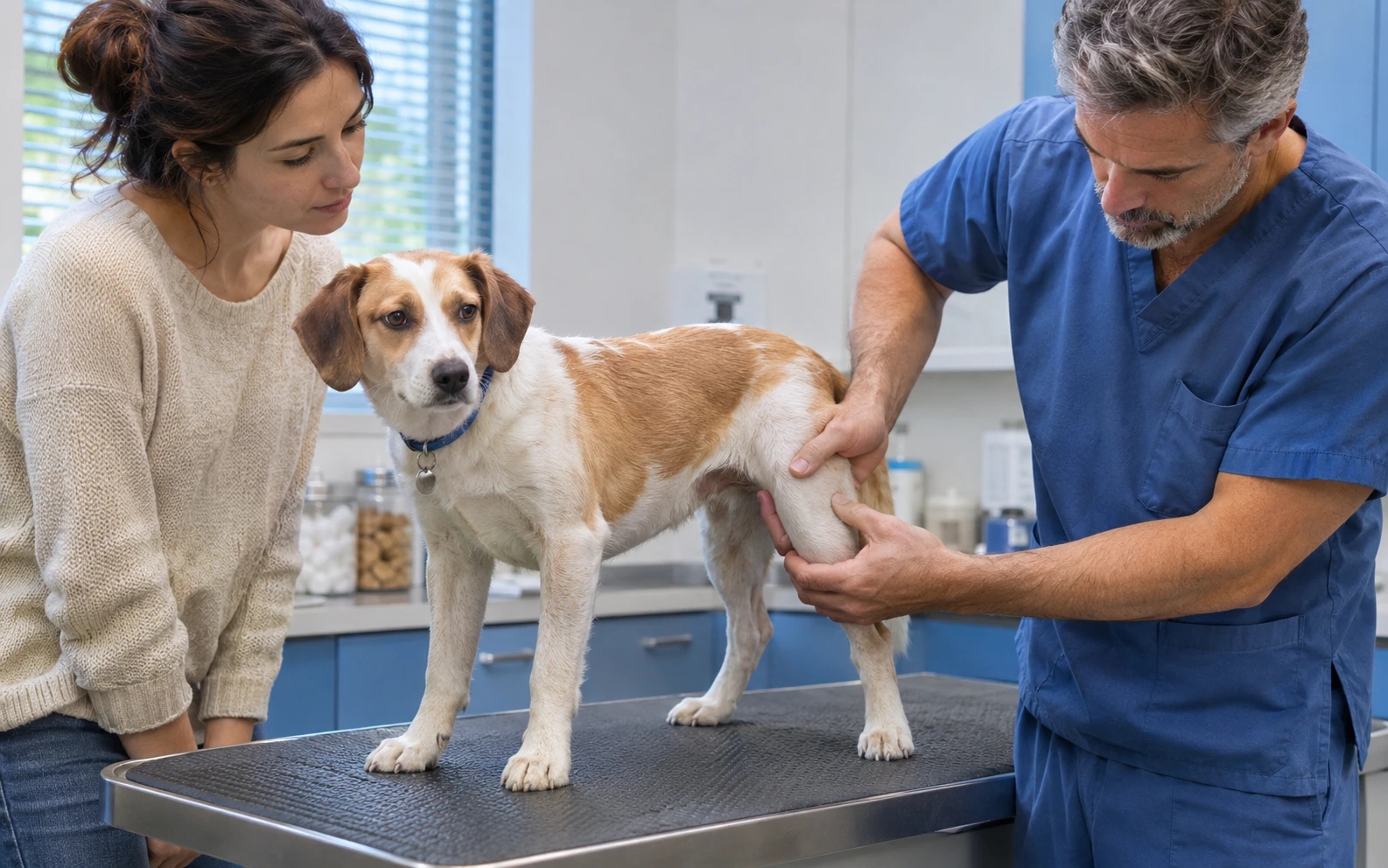
If your veterinarian has diagnosed your dog with medial or lateral patellar luxation, the terminology may sound complicated. However, understanding the difference between these two conditions can help you make more informed decisions about your pet's orthopedic health. Both conditions involve the kneecap, also known as the patella, moving outside the groove where it normally sits. The primary difference is the direction in which the kneecap moves. Understanding how kneecap displacement affects your dog's movement, limb alignment, and treatment options can make veterinary discussions easier to follow.
What Is Medial Patellar Luxation in Dogs?
Medial patellar luxation occurs when the kneecap slips toward the inside of the leg, in the direction of the body's midline. This movement takes the patella outside its normal groove, potentially affecting knee stability and comfortable movement. Dogs with medial patellar luxation may occasionally skip while walking, lift the affected hind leg, or experience changes in their normal gait. The severity of these symptoms depends on several factors, including how frequently the kneecap moves out of position and whether it returns to its normal location.
What Is Lateral Patellar Luxation in Dogs?
Lateral patellar luxation occurs when the kneecap slips toward the outside of the leg, away from the body's midline. Like medial luxation, this displacement can interfere with normal knee function and affect how a dog walks or stands. Lateral patellar luxation may also be associated with abnormalities in limb alignment. Both medial and lateral patellar luxation can affect either the right or left knee, and some dogs may experience problems in both knees. The terms medial and lateral describe the direction of kneecap displacement, not which leg is affected.
Medial vs. Lateral Patellar Luxation: Key Differences
The main difference between these conditions is the direction of kneecap movement.
- Medial patellar luxation: The kneecap moves inward, toward the body's midline.
- Lateral patellar luxation: The kneecap moves outward, away from the body's midline.
Both conditions may cause changes in walking patterns, unusual hind-leg positioning, or difficulty using the affected limb. Importantly, the direction of displacement does not automatically determine how serious the condition is.
Is Medial or Lateral Patellar Luxation More Serious?
Neither medial nor lateral patellar luxation is automatically more severe simply because of the direction of displacement.
Veterinarians consider several factors when evaluating the condition, including:
- How frequently the kneecap moves outside its normal groove.
- Whether the kneecap returns to its normal position.
- The alignment of the affected leg.
- Whether the dog experiences pain or discomfort.
- The degree of difficulty walking or using the affected limb.
Some dogs experience only occasional skipping or hopping. Others may consistently hold up the affected leg or develop an unusual standing posture. In certain cases, severe medial patellar luxation in growing puppies can cause the legs to develop a bowed appearance. Some larger dogs with lateral patellar luxation may develop a knock-kneed appearance. These differences highlight why a complete orthopedic examination is important.
Why Does Limb Alignment Matter in Patellar Luxation?
The kneecap is part of a connected anatomical system that helps support normal knee movement.
This system includes the:
- Thigh muscles.
- Femur, or thigh bone.
- Patella, or kneecap.
- Patellar tendon.
- Tendon attachment on the shin bone.
When these structures are properly aligned, the kneecap can move within its normal groove. However, abnormalities in bone structure, muscle alignment, or tendon positioning may cause the kneecap to move outside its intended path. This is why patellar luxation treatment in dogs may involve more than simply returning the kneecap to its normal position. Veterinarians must evaluate the underlying alignment problems contributing to the displacement.
How Is Medial or Lateral Patellar Luxation Diagnosed?
A veterinary orthopedic examination is an important step in identifying the direction and severity of patellar luxation. Your veterinarian may assess how your dog walks, examine the affected knee, and evaluate the kneecap's movement and stability.
Physical Examination
During a physical examination, the veterinarian evaluates the kneecap's position and checks whether it moves inward or outward. The examination also helps identify abnormalities in knee stability and limb function.
Diagnostic X-Rays
X-rays provide useful information about bone structure and alignment. They may also help veterinarians identify additional joint abnormalities that could influence treatment decisions.
Advanced CT Imaging
Not every dog diagnosed with patellar luxation requires a CT scan. For many patients, a physical examination and X-rays provide important diagnostic information. However, three-dimensional computed tomography (CT) may be recommended when significant bone deformities require a more detailed assessment before corrective surgery. Your veterinarian will determine whether advanced imaging is appropriate for your dog's individual condition.
How Does the Direction of Patellar Luxation Affect Treatment?
The general treatment principles for medial and lateral patellar luxation are similar. The primary goals are to improve kneecap tracking and address the anatomical abnormalities responsible for displacement. However, the specific corrective procedures may differ depending on the direction of kneecap movement.
For example, surgical planning may involve different approaches to:
- Balancing the soft tissues surrounding the kneecap.
- Realigning the patellar tendon attachment.
- Correcting abnormalities affecting kneecap tracking.
- Addressing significant bone alignment problems when necessary.
Not every dog requires surgery. Treatment decisions depend on the severity of the condition, clinical symptoms, joint function, and other individual factors. The final treatment plan should be based on a thorough assessment of the affected knee rather than simply whether the diagnosis is medial or lateral patellar luxation.
Understanding Your Dog's Knee Condition
A diagnosis of medial or lateral patellar luxation may initially seem confusing, but understanding the direction of kneecap displacement is a useful starting point. Both conditions can affect knee function, mobility, and overall comfort. Your veterinary team can explain how the kneecap moves, whether limb alignment abnormalities are present, and which diagnostic or treatment options may be appropriate.
Consider asking your veterinarian to demonstrate the direction of displacement using an anatomical model or diagnostic image. Understanding your dog's knee anatomy can make treatment discussions clearer and help you participate in decisions about your pet's care.
If your dog experiences repeated skipping, hind-leg limping, or unusual walking patterns, contact All Creatures Veterinary Center to discuss an orthopedic examination. Schedule Your Dog's Veterinary Examination Today!
Understanding Your Dog's Knee Condition
A diagnosis of medial or lateral patellar luxation may initially seem confusing, but understanding the direction of kneecap displacement is a useful starting point. Both conditions can affect knee function, mobility, and overall comfort. Your veterinary team can explain how the kneecap moves, whether limb alignment abnormalities are present, and which diagnostic or treatment options may be appropriate.
Consider asking your veterinarian to demonstrate the direction of displacement using an anatomical model or diagnostic image. Understanding your dog's knee anatomy can make treatment discussions clearer and help you participate in decisions about your pet's care.
If your dog experiences repeated skipping, hind-leg limping, or unusual walking patterns, contact All Creatures Veterinary Center to discuss an orthopedic examination.
Schedule Your Dog's Veterinary Examination Today!